
Whitewash fears averted as Alistair Cook hits a superb 244 not out
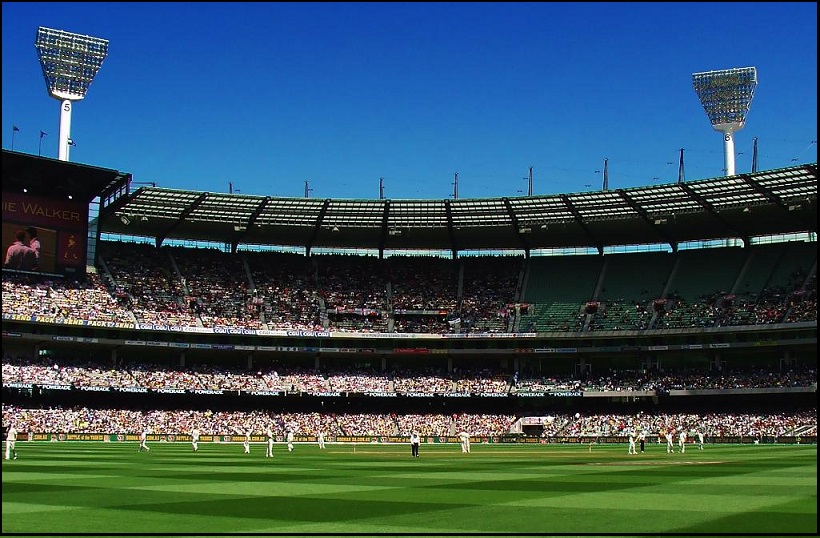
The Ashes series, 2017/18 – Fourth Test at The Melbourne Cricket Ground, Australia – Australia 327 & 263-4 dec, England 491: Match drawn.
It was the late, great Vitas Gerulaitis who summed up perfectly why you have to finally kill a long losing streak. In 1980, Gerulaitis finally beat Jimmy Connors in the Volvo Tennis Masters at Madison Square Garden, after a run of 16 straight defeats.
Asked how he managed it, Gerulaitis replied: “Because nobody beats Vitas Gerulaitis 17 times in a row”.
England’s subservience to Australia in Ashes Tests on Australian soil wasn’t quite on the Gerulaitis/Connors scale, but England went into this famous Boxing Day Test facing a ninth successive defeat down under. It was averted courtesy of a draw which, although being irrelevant in terms of a series already lost, at least stopped the flow of defeats.
Progress? I guess – the record books will say so. A reason for optimism going forward? Ah, now that is a very good question.
There were two changes to the sides from the last Test, England brought in Northants’ left-armer Tom Curran for Craig Overton and his injured ribs, and Australia replaced Mitchell Starc with Jackson Bird, allowing Starc to rest his troublesome bruised heel.
Australia won the toss and decided to bat. The pitch, which was later to disgrace itself in the eyes of many, looked a good source of runs. The England seamers, and James Anderson in particular, enjoyed some good early bounce, despite the later unresponsiveness.
The Aussie openers had very different fortunes. Cameron Bancroft looked out of touch all day until he was put out of his misery by Chris Woakes on 26. David Warner, meanwhile, hit a typically punchy 103 – having a massive reprieve on 99 when it looked like he’d given his wicket away to the debutant Curran.
Warner played a horrible shot, a mistimed attempted pull, and spooned a dolly to Stuart Broad at mid-on. England’s euphoria was swiftly halted when it became clear Curran had overstepped, and it was in fact a no-ball.
Shortly afterwards, Warner completed his ton and celebrated wildly. Red faces everywhere for Curran and England. There were reports of some choice sledging from Warner to various England players as he completed his century, although both sides later downplayed it in interviews. It probably didn’t happen anyway – David Warner? Sledging with gusto at high volume? Surely not.
Warner was out legitimately soon after, caught behind by Jonny Bairstow off Anderson for 103. It was a quality innings, especially valuable as Usman Khawaja contributed a mere 17 before Broad dismissed him. It was an innings that was as disappointing for Australia as Bancroft’s.
England had generally bowled well, doing what they could with the pitch in terms of seam and pace – although Moeen Ali yet again looked bereft of confidence and ideas with his off-spin. Australian skipper Steve Smith cast a shadow on England’s progress, coming in at 160 for 3 to steady their innings with a good 65, leaving Australia on 244 for 3 at stumps.
Day two was good for England. Smith added only 11 more runs to his score before playing-on to a Curran delivery and losing his stumps. Shaun Marsh posted a creditable 61, but the remaining Australian batsmen rather capitulated, their last 7 wickets tumbling for a mere 67 runs, (quick, check their caps – have Three Lions replaced the emu and the ‘roo?) netting a total of 327 all out. Broad helped himself to 4 for 51, and Anderson 3 for 61, the two old warhorses bowling well in tandem.
England started their innings in good style. The runs flowed, and despite the loss of Mark Stoneman and James Vince for a combined 32, Alistair Cook and Joe Root took charge with a terrific unbeaten stand of 112. Cook looked imperious, hitting his 32nd Test hundred. But he enjoyed a life, however – Steve Smith dropping him at slip on 66, off the bowling of Mitchell Marsh.
Credit Smith for trying everything to make the catch, though – it went from right hand to left hand, to both hands, to no hands. We were witnessing a juggling masterclass – Smith had clearly finished with the ball, so the anticipation for, perhaps, clubs next – and maybe knives for the grand finalé – was sky-high. Sadly, Smith’s expression after his demo with the ball told us in no uncertain terms that no other implements were coming out. Probably just as well in the case of the knives, judging by his face.
Sadly for Smith and Australia, this reprieve for Cook was going to prove a very costly error indeed.
Root was on 49 when the days play ended, Cook on 104. At 192 for 2, trailing by 135 runs but with their two best batsmen well established, and wickets in hand, this was some day for England indeed.
Day three saw Cook effectively guide England to safety, putting them in a position they were unlikely to lose from. His concentration, application and grit were superb, as he hit an unbeaten 244. Many of the qualities English batsmen had been lacking in this series so far were exemplified right here, in Cook.
But is it fair to ask where this sort of innings was from an England player when the series was still alive? Yes, I think so. This was a terrific innings – Cook became the first visiting player ever to carry his bat at the MCG, after all – but sadly, it came in a dead rubber, it has to be said.
Frustratingly, Joe Root, once again, couldn’t convert a great start into a hundred, falling for 61, lured into a pull shot after a series of hostile deliveries from Pat Cummins. Root top-edged into the grateful hands of Nathan Lyon at deep square leg. He was furious with himself and so he should have been. The barrage of short stuff, Root’s keenness to play it, and the subsequent field placings were an obvious trap and Root fell straight into it.
Day four, and England’s innings ended as soon as play had begun. As many had feared, the prospect of Cook adding much more to his 244 was threatened by the fact Anderson was on strike, and so it proved. He was out first ball, bowled Cummins caught Bancroft – all over, 491 all out, a lead of 164.
Australia made it to lunch on 70 for 2, having lost Bancroft and Khawajah cheaply, but happy in the knowledge they had both Smith and Warner at the crease. It was, however, quite prosaic to watch, particularly from an unusually circumspect Warner.
The weather Gods didn’t seem impressed either. Just prior to the conclusion of the 45th over, the rain descended and fairly quickly it looked like we may have seen the last of the day’s action. Sure enough, a couple of hours later, with Australia on 103 for 2, 61 runs behind England, play was abandoned for the day.
A mild hubbub emerged during the day concerning some TV images, showing Anderson apparently running a fingernail along the seam of the ball. Some leading Aussie ex-pros (Shane Warne, Mike Hussey and Michael Slater) all wore raised eyebrows and questioned Anderson’s actions.
England Head Coach Trevor Bayliss was swift to diffuse things after a meeting with the Umpires, who apparently assured Bayliss there was nothing in it. So, despite some very excited, animated and aggrieved Australian observations, we quietly file this one away under “squally shower in a tea-cup” – not even awarding it full storm status.
Had Anderson actually been trying to gain any form of unfair advantage in all this, (which of course, he wasn’t – CTS legal team) – he would certainly have won this years “It’s a bit late now, mate” award.
Final day. A result in prospect? Somehow the draw always looked favourite. But when Warner and Shaun Marsh were removed in the space of 6 runs – part-time spinner Root ending Warner’s century hopes on 83 – England’s hopes brightened. Australia were on 178 for 4, only 14 runs ahead, with lunch imminent, and 66 overs left.
But, of course, where there is Steve Smith, there is considerable Australian hope. And once again their ever-impressive captain showed the way, steering Australia out of any danger – perceived or otherwise – winding down the overs with aplomb, adding the small matter of yet another century to his personal collection.
His stats are becoming surreal – the first Aussie in 15 years to score three hundreds in an Ashes series, and the first for 23 years to achieve 600 series runs. He was always at the sharp end, facing more than 200 overs, spending more than 31 hours at the crease in the four Tests of the series so far.
A fourth successive hundred in Melbourne Test matches confirmed his liking for this ground in particular, but frankly, on current form, if you put him to work in the nearest pub car park, batting with a stick of celery, you’d fancy him for a fifty at least.
England didn’t particularly look like they’d take 6 more wickets, with the pitch looking very slow and unresponsive, offering very little to the bowlers. The overs passed, and everyone knew how this one was ending. The draw was inevitable, and an hour before the scheduled close of play, the captains shook hands to confirm it. For the record, Australia had declared on 263 for 4, 99 runs ahead.
So it won’t be a 5-0 series whitewash, that’s now official – some respite for England at least. Their batting was much improved here, and hopefully the draw will increase confidence, although they are by some distance second-best in this series, that is unarguable.
The pitch came in for severe criticism from players, media and fans alike. Prior to the start of day one, it seemed to garner a general thumbs up, but as the Test progressed, the surface didn’t offer anything to the bowlers, whatever their pace. When people start using words like turgid to describe a pitch, you know they aren’t happy.
A statement from MCC (That’s Melbourne Cricket Club in this case, not Marylebone), Chief Executive Stuart Fox confirmed in a statement that there will be an official review of the surface. “While this Test pitch did produce a good contest, it has not contained the bounce and pace that we expected. As the game progressed, the surface did not deteriorate, nor bring the level of unpredictability that was anticipated”. There’s an expression involving Sherlock Holmes that springs to mind here, but we’ll leave it at that.
Both Captains highlighted the issue afterwards.
“It was nice to be there at the end and get the boys to a draw – it was that or an England win so I’m pleased,” said Steve Smith. “I’m also pleased for Mitch Marsh, I thought he played very well. We weren’t worried (after England’s innings). It’s such a flat, dead wicket, so we knew if we got in it’s really hard to get out”
“I don’t think the pitch is a great cricket wicket, I wouldn’t want to play on it all the time. It’s not what people want to come and see.”
Joe Root, rightly, attempted to sound some positives after England had at least avoided another defeat. “Obviously we’re frustrated having got to lunch with a chance of winning the game, but it’s a very flat wicket and the bowlers worked very hard and did very well. Steve Smith did incredibly. To bat that long, even on that pitch, takes a lot of concentration”.
“That was as flat a wicket as they come. Credit to our guys for taking any wickets on there. The fans have been unbelievable. There’s no doubt they are the best fans in the world. They’ve seen some tough games on this tour but they’re still there every day. The players appreciate it so much.
“(My failure to convert 50s to 100s) is frustrating but it’s something I don’t want to think about too much. It’s important to keep on playing as I am. I know I’m playing well. The draw is something to build on. Hopefully we can leave Sydney with a win.”
So the series moves onto Sydney, its final destination, and England travel having achieved their best result so far. It’s a shame for England supporters that it wasn’t a win, but after three straight defeats you have to start somewhere.
For Australia, the momentum is all theirs. In overall terms, they are bossing England with bat and ball and have the stand-out players of this series. They can no longer achieve a whitewash, but you can be sure they will want to make it four wins out of five after this draw.
England know what to expect, but whether they can successfully deal with it in Sydney, is quite another matter.
By Chris Tribe
31st December 2017
Copyright © 2017 Chris Tribe. All Rights Reserved.
Photo credit: Copyright © Flickr user, mugley/Under Creative Commons Attribution-ShareAlike license

 Chris Tribe Sportswriting